



This article is part of our comprehensive series on Design Patterns in Laravel:
- Introduction to Design Patterns in Laravel (Current Article)
- Understanding the Singleton Pattern in Laravel
- Implementing the Factory Pattern for Flexible Object Creation
- Leveraging the Adapter Pattern for Third-Party Integrations
- Enhancing Functionality with the Decorator Pattern
- Optimizing Communication Using the Observer Pattern
- Simplifying Complex Operations with the Facade Pattern
- Applying the Strategy Pattern for Dynamic Algorithms
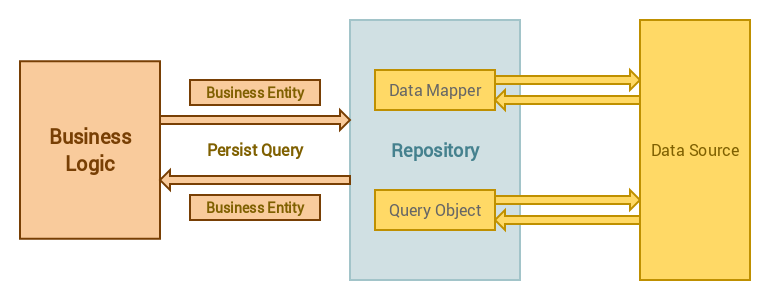
- Utilizing the Repository Pattern for Data Access
- Exploring the Service Layer Pattern for Business Logic
- Implementing the Command Pattern in Laravel
- Building Complex Objects with the Builder Pattern
- Utilizing the Template Method Pattern for Reusable Algorithms
- Navigating Collections with the Iterator Pattern
- Managing State with the State Pattern
- Applying the Chain of Responsibility Pattern
- Facilitating Communication with the Mediator Pattern
- Extending Functionality with the Visitor Pattern
- Cloning Objects Using the Prototype Pattern
- Optimizing Resources with the Flyweight Pattern
- Saving State with the Memento Pattern
- Controlling Access with the Proxy Pattern
- Composing Objects with the Composite Pattern
- Decoupling Abstraction and Implementation with the Bridge Pattern
- Interpreting Languages with the Interpreter Pattern
- Handling Null References with the Null Object Pattern
In the realm of software development, designing applications that are reliable and scalable is crucial. Design patterns are essential tools in achieving these objectives, providing reusable solutions to common problems. Whether you’re dealing with object-oriented programming (OOP), user interfaces, or architectural designs, design patterns offer a structured approach to software development.
This article marks the beginning of our series on Design Patterns in Laravel. Throughout this series, we’ll explore various design patterns, understand their benefits, and learn how to implement them in Laravel, one of the most popular PHP frameworks.
What Are Design Patterns?
Definition
Design patterns are well-established solutions to recurring challenges in software design. They act as templates or blueprints that developers can utilize to address common design problems. By providing a standard terminology and approach, design patterns ensure that code is dependable, adaptable, and easier to maintain.
Purpose
The main purpose of design patterns is to elevate software development practices by offering standardized solutions. They help in organizing code, promoting reusability, and simplifying the design process. By adhering to established patterns, developers can avoid unnecessary repetition and focus on creating efficient, high-quality applications.
Benefits
Implementing design patterns in software development yields numerous benefits:
Code Reusability: Encourages the reuse of proven solutions, reducing redundant code and saving valuable development time. This improves productivity and efficiency.
Scalability: Provides flexible structures that can adjust to changing needs and accommodate future expansions, ensuring that software systems can grow without significant architectural overhauls.
Maintainability: Results in more modular code that is easier to understand, test, and maintain. Developers can modify specific parts of the software without impacting the entire application.
Collaboration: Establishes a widely-used language for developers, fostering effective communication and understanding of the software’s architecture. This promotes seamless collaboration among team members.
Types of Design Patterns
Design patterns are generally categorized into three main types:
1. Creational Patterns
These patterns focus on object creation mechanisms, providing flexible ways to create objects while keeping the code independent of the specific types of objects created.
Singleton: Ensures a class has only one instance and provides a global point of access to it. Suitable when exactly one object is needed to coordinate actions across the system.
Factory: Abstracts the instantiation process, allowing subclasses to alter the type of objects that will be created. It provides a central factory class that encapsulates object creation logic.
2. Structural Patterns
Structural patterns deal with object composition, defining how objects and classes can be combined to form larger structures.
Adapter: Allows incompatible interfaces to work together by converting the interface of one class into another expected by clients.
Decorator: Dynamically adds new behavior to objects by placing them inside special wrapper objects that contain the behaviors.
3. Behavioral Patterns
These patterns focus on communication and interaction between objects, defining how objects collaborate to perform tasks.
Observer: Establishes a one-to-many dependency between objects so that when one object changes state, all its dependents are notified automatically.
Strategy: Defines a family of algorithms, encapsulates each one, and makes them interchangeable. This pattern lets the algorithm vary independently from clients that use it.
How to Use Design Patterns in Laravel
Identifying the Problem
To effectively leverage design patterns, it’s crucial to identify the problem or scenario that requires a solution. This involves understanding the software architecture’s requirements, constraints, and potential areas for improvement.
Selecting the Appropriate Pattern
Once the issue has been identified, the next step is to select the most appropriate design pattern. Each pattern serves a distinct purpose within a specific context. Consider factors like scalability, maintainability, and code complexity when making your choice.
Implementing the Chosen Pattern
After selecting the design pattern, proceed with the implementation phase. This involves creating the necessary classes and interfaces and establishing the relationships specified by the chosen pattern. Proper documentation and code comments are essential to ensure clarity for future maintenance.
Real-World Example in Laravel
Model-View-Controller (MVC) Architecture
Laravel inherently follows the MVC (Model-View-Controller) architectural pattern, which separates the application into three interconnected components:
Model: Manages the data and business logic of the application.
View: Handles the presentation layer, displaying data to the user.
Controller: Processes user input, interacts with the model, and selects the view to render.
Example Overview:
The Route defines the URL and associates it with a controller action.
The Controller handles the request, interacts with the Model to retrieve data, and passes it to the View.
The View displays the data to the user in a formatted way.
This separation of concerns promotes organized code, making it easier to maintain and scale the application.
Conclusion
Design patterns are indispensable tools for software developers, providing reusable solutions to common design challenges. By leveraging design patterns in Laravel, you can enhance code reusability, scalability, and maintainability. Familiarity with various design patterns and their appropriate usage empowers you to build efficient and robust applications.
Happy coding!











Comentários Recentes